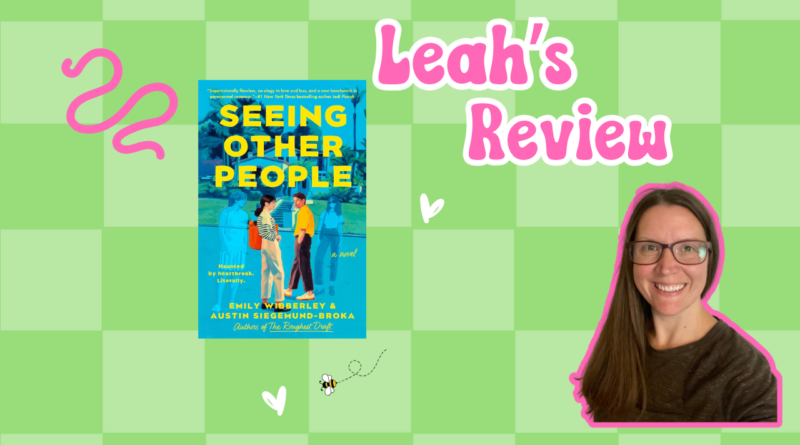
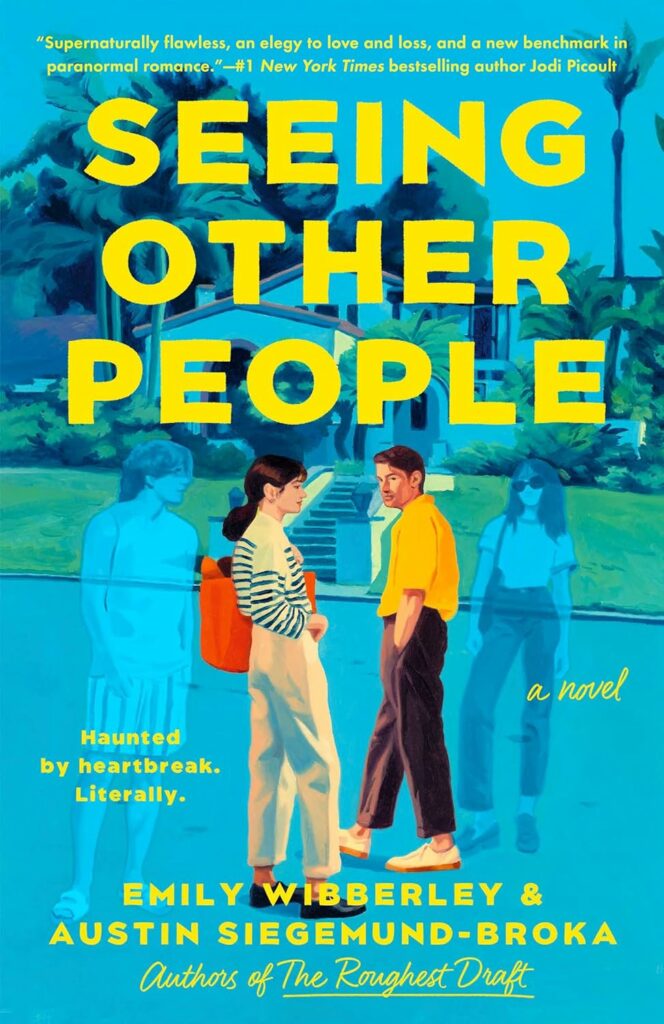
Seeing Other People by Emily Wibberley and Austin Siegemund-Broka
There was something undeniably refreshing about Seeing Other People. I genuinely hadn’t read anything quite like it before. On the surface, it’s a romance with a ghostly twist—but underneath, it’s a deeply honest story about grief, denial, and the complicated ways we hold on to the past.
The premise alone is brilliant: two people literally haunted by their exes. Kennedy is being ghosted by her ex (well kind of)… except Zach is now haunting her after one single date. Meanwhile, Sawyer’s fiancée-turned-ghost is beginning to fade. When Kennedy says, “I never wanted to be in a love triangle with a ghost” this perfectly captures the emotional tension woven throughout the story. It’s funny, yes—but it’s also achingly real.
What makes this book shine is how thoughtfully grief is portrayed. Sawyer is stuck in his grief, clinging to what was and refusing to imagine a future without it. His inability to move forward feels raw and authentic. On the other side, Morgan (and Zach, in his own way) wrestles with unfinished business and the confusion of what exactly that business is (at least in Zach’s case). Kennedy’s storyline adds another layer—being haunted without understanding why, living in that in-between space of unresolved emotion. The way grief hinders growth, distorts perspective, and freezes people in place is handled with so much care.
The ghostly elements are done exceptionally well.
They’re not gimmicky or over-the-top—they’re symbolic extensions of the characters’ emotional states. The support group for humans and their haunters is such a clever device, blending humor with vulnerability. And as Kennedy and Sawyer work together, the dynamics beautifully shift into the process of letting go.
I especially loved the symbolism of the jacaranda tree and plants throughout the novel. Growth, seasons, blooming and fading—it all quietly reflects the emotional arcs of the characters. Some things die. Sometimes things return. And some things bloom when you least expect them. That imagery lingers long after the last page.
At its heart, this story isn’t just about being haunted by ghosts—it’s about being haunted by who we used to be and who we thought we’d love forever. Watching Morgan and Sawyer’s connection grow—tentative, tender, and very much alive—felt hopeful in the best way. Their romance doesn’t erase the past; it honors it while choosing something new.
This book is heartfelt, original, and quietly powerful. It reminds us that love isn’t dead—even when it feels like it might be.
Want more from Emily Wibberley and Austin Siegemund-Broka?
Check out this Author Spotlight Episode